
Honestly.
If you’ve tried to grab attention online lately, you already know the feed is ruthless. You open Instagram for one thing, lose ten minutes to a golden retriever on a paddleboard, and somehow end up watching a stranger organize their fridge. That is the competition. Not other brands. Not your category peers. Chaos.
That’s the environment your video production has to survive in.
I keep seeing teams underestimate this. Someone says, “We’ll just make a quick video,” like it’s a box to check. A month later, the video goes live, nobody watches past three seconds, and the post quietly dies. Then the Slack thread goes silent in that uncomfortable way where everyone knows the thing didn’t work, but nobody wants to say it out loud.
Here’s the part that stings a little.
Video production is not decoration anymore. It is infrastructure. It is how your message moves through the internet. If it’s built wrong, everything on top of it wobbles.
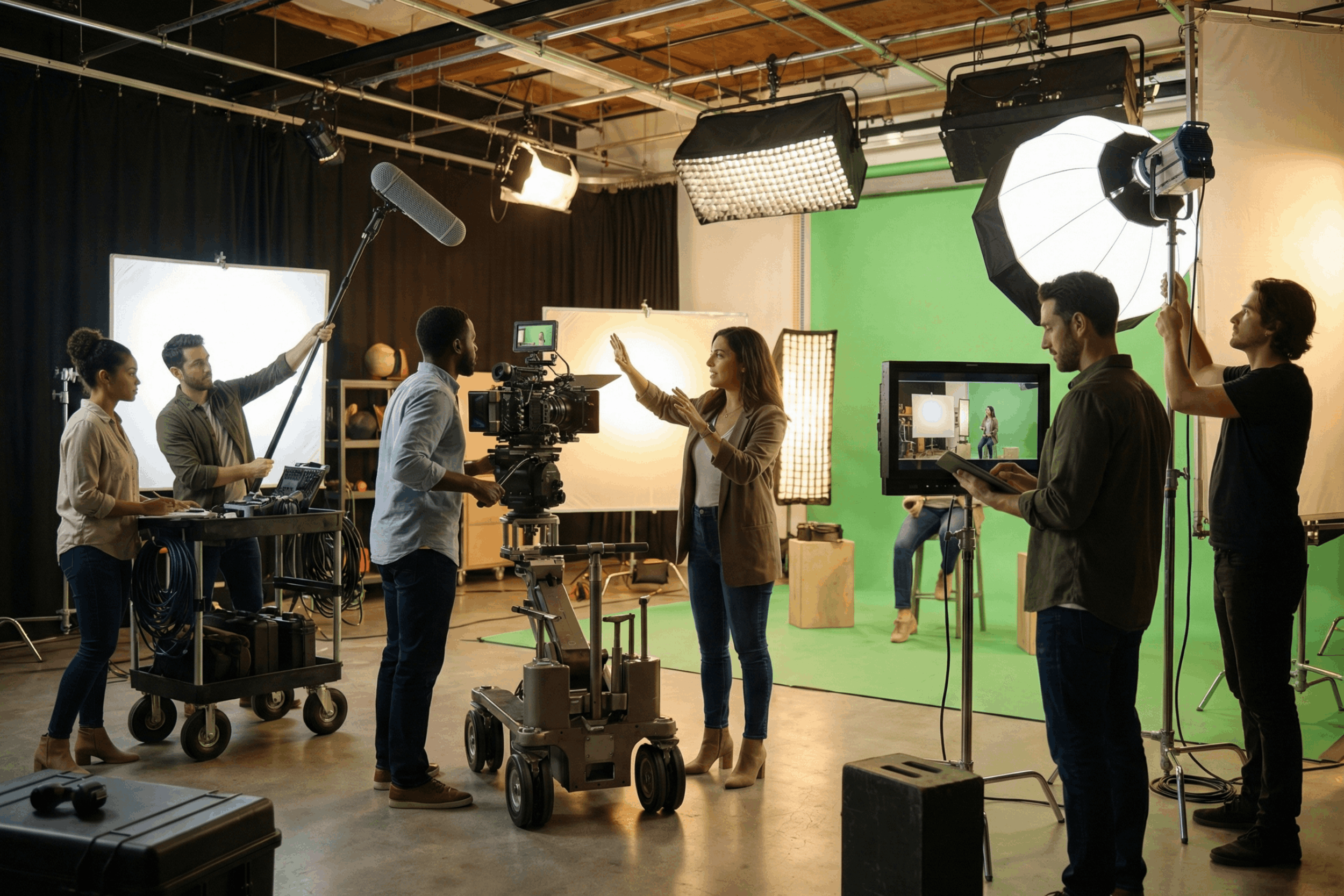
I’ve been in rooms where the conversation was all about cameras, lenses, lighting rigs, and whether the office had enough natural light for “vibes.” Meanwhile, nobody could answer the basic question of what the video was supposed to change. More signups? Better product understanding? Fewer support tickets? If you can’t articulate the job of the video, the video will absolutely not figure it out for you.
The camera doesn’t fix confusion.
The edit doesn’t magically create relevance.
And “we’ll figure it out in post” is how timelines quietly slip.
Strong video production starts upstream. Before anyone hits record. With the uncomfortable thinking. With the audience reality check. With acknowledging that people do not owe you attention, and your content has to earn it in about two seconds flat.
I’ve watched the same product perform wildly differently just based on how the opening beat of a video was structured. Same budget. Same features. Different framing. Suddenly, retention goes up. Comments appear. Paid performance stabilizes. It feels like magic, but it’s not. It is just intentional video production doing what it’s supposed to do.
This list exists because not every video production company works this way.
Some teams are brilliant at cinematic brand storytelling. Others are killers in fast, messy social environments where trends die before your legal team finishes reviewing the caption. Some obsess over product clarity in a way that quietly lifts conversion without anyone on the team throwing a party about it. Different strengths. Different DNA.
As you read through this, you’ll notice patterns.
Who builds for big, high-polish moments.
Who thrives in short-form chaos where perfection is suspicious.
Who treats product video as a conversion tool instead of a mood board.
And who actually has systems that hold up when volume increases.
If you’re comparing social media video production companies, you’ll start to see how pacing, hook design, and native-feeling execution separate the ones who “get it” from the ones who learned TikTok from a deck. If you’re evaluating an e-commerce product video production company, pay attention to who understands that most people watch with the sound off, half-distracted, one thumb hovering over the back button.
One small but real note before we get into the criteria.
Fit matters more than the deck.
Process matters more than the sizzle reel.
And chemistry matters more than anyone admits in procurement meetings.
The right video production partner feels like they’re sitting on your side of the table. The wrong one feels like you’re managing a group project where nobody wants to own the hard parts.
What Makes a Great Video Production Company?
A great partner blends taste, strategy, and execution without turning every decision into a three-week debate. The difference between a “cool video” and something that actually moves metrics usually lives in these details.
1) Strategy before spectacle
This is where people get distracted.
Pretty shots.
Moody lighting.
Drone footage gliding over an office park for no discernible reason.
All of that can look impressive and still do absolutely nothing for your business.
Strong video production starts with uncomfortable questions. What is this video supposed to change? Behavior. Understanding. Intent. If a partner can’t clearly map the creative to an outcome, you’re probably paying for aesthetics instead of results.
Among social media video production companies, strategy shows up in how seriously they take hooks. Not “what’s the concept,” but “why would someone stop scrolling for this?” That is a different creative muscle. With an e-commerce product video production company, strategy shows up in ruthless prioritization. What feature actually reduces friction? What misconception keeps showing up in reviews? That becomes the spine of the video.
If a team jumps straight into visuals without defining the job of the content, that is not confidence. That is guessing with a camera.
2) Platform fluency
I once watched a beautifully produced video flop on TikTok so hard it was almost painful. The lighting was perfect. The framing was clean. The pacing was… completely wrong. It felt like a YouTube pre-roll from a different decade. The comments roasted it in real time.
That wasn’t a creative failure.
That was a platform failure.
Great video production respects context. Social feeds behave differently than product pages. Stories behave differently than pre-roll. The best social media video production companies think in native formats. Vertical framing. Fast visual rhythm. Captions you can read without squinting. Openings that acknowledge how distracted people actually are at night in bed (yes, that matters more than anyone likes to admit).
A solid e-commerce product video production company understands marketplace behavior. Autoplay is silent. The first frame does most of the work. People skim. They are looking for reassurance, not a short film.
If a video production partner treats every platform like the same screen resized, performance will quietly tell on them.
3) Repeatable production systems
One great video is nice.
Ten usable videos that ship on time is a system.
The difference between serious video production companies and “we made one cool thing once” shops is repeatability. Clean briefs. Locked scripts before shoot day. Shot lists that actually map to deliverables. Post workflows that do not turn into endless email archaeology.
Strong social media video production companies can take one core idea and responsibly spin out dozens of usable variations without creative chaos. A thoughtful e-commerce product video production company builds libraries. Not just one product clip, but PDP loops, demos, FAQs, comparison angles, and detail shots that feel cohesive.
If the process feels scattered during the pitch phase, it will feel worse once production starts. That is not pessimism. That is pattern recognition.
4) Data-driven creative
This part makes some creatives flinch.
But the best video production teams care about what actually happens after the video ships. Watch time. Drop-off. Click behavior. Conversion lift. Among social media video production companies, this often turns into systematic hook testing. Same idea. Different openings. Real feedback from performance instead of vibes in a room.
For an e-commerce product video production company, data shapes feature emphasis. If buyers keep bouncing because they can’t quickly understand setup or compatibility, the next video solves that. Not because it’s “more exciting,” but because it removes friction.
Creative taste still matters.
Taste without feedback is just guessing with confidence.
5) Range with restraint
Yes, range matters. Live action. UGC. Motion. Screen capture. You want a video production partner who can handle different formats when the job calls for it.
But restraint is the better signal.
The best teams don’t chase formats because they’re trendy. They choose formats because they solve the problem. If the goal is fast awareness, social media video production companies often lean into creator-style energy that feels native. If the goal is conversion, an e-commerce product video production company gets uncomfortably obsessed with clarity. Macro shots. On-screen text that answers real questions. Demos that don’t try to be clever at the expense of understanding.
When format choice follows strategy instead of aesthetics, results tend to follow too.
6) Transparent pricing and rights
If pricing feels vague, that’s not creative mystique. That’s operational risk.
Good video production partners break things down. You should know what you’re paying for. You should know what rights you own. Strong social media video production companies often include cutdowns and multiple aspect ratios because that’s how content actually gets used. A thoughtful e-commerce product video production company includes PDP formats, silent-friendly edits, and usable stills so your team can stretch assets across touchpoints.
If you do not clarify usage rights and deliverables early, you will absolutely learn about them later. Usually at the worst possible moment.
7) Proof you can feel
Portfolios can lie by omission.
Any competent video production company can curate a reel that looks impressive in isolation. What matters more is whether the work feels like it could solve your problem. Not whether it would win a mood board contest.
When I look at partners, I look for evidence of real-world constraints. Tight timelines. Mixed audiences. Content that had to work in multiple formats, not just one pristine hero cut. Strong social media video production companies can show how one idea became a family of hooks and cutdowns that still felt coherent. A serious e-commerce product video production company will show how product video changed the clarity of a PDP experience, not just how pretty the lighting was.
Ask for context.
What was the goal?
What broke?
What would they do differently now?
Real teams have scars. That is usually a good sign.
8) Collaboration without chaos
You are going to give notes.
They are going to push back.
That tension is healthy when it’s structured.
The best video production partners do not vanish for weeks and come back with “the cut.” They walk you through options. They explain trade-offs. They document feedback so version two doesn’t quietly undo version one.
Social media video production companies that scale well tend to be obsessive about communication because short-form moves fast. Miss one approval window and the moment is gone. A reliable e-commerce product video production company builds review cycles into the schedule so PDP content doesn’t stall waiting on internal sign-off.
If the process feels confusing before you sign, it will feel chaotic when you are in the middle of it.
9) Content engines, not one-offs
One video rarely fixes anything.
It might get a few nice comments.
It might earn you a Slack “🔥” from someone on the team.
It might even look good sitting on your homepage like a trophy you walk past and stop noticing.
Then… nothing changes.
And you’re sitting there wondering why the numbers didn’t magically move.
This is where good video production companies feel different. They don’t sell you a moment. They help you build a system. A thing that keeps showing up even when the novelty wears off. Among social media video production companies, this usually looks like an always-on cadence. Weekly drops. Monthly themes. Iteration cycles that actually get reviewed instead of quietly archived in a Google Drive folder called “Q3_FINAL_FINAL.”
A serious e-commerce product video production company treats PDP content like living infrastructure. Not precious artifacts. Seasonal refreshes. New bundle clips. Comparison videos when competitors shift their positioning. Short micro-demos when features change (because they always change). It’s not glamorous work. It doesn’t win awards. But it compounds. Slowly. Quietly. Then all at once, it seems.
This is the moment where video production stops being a campaign and starts being part of how the company functions. Less “we need a video.” More “this is how we explain ourselves now.”
10) Chemistry and trust
You can’t spreadsheet this one.
Trust me, people have tried.
You are going to spend real time with your video production partner. Review calls that run long. Comment threads that get a little spicy. That one moment where someone says “Can we just try one more version?” and everyone exhales (you know the one). If the dynamic feels tense early, it doesn’t magically improve once timelines get tight.
The best relationships feel collaborative. Not transactional. You trust their judgment. They respect your constraints. Both sides care about the outcome more than about being right in the room.
When that chemistry is real, the work moves faster. Feedback gets sharper. People stop protecting ideas just because they came from them. That is when video production stops feeling like work and starts feeling like momentum.
The 10 Best Video Production Companies in 2025–2026
Each listing includes a quick profile, specialties, and why they stand out.
1. Sparkhouse
Profile: Award-winning California agency known for commercials, brand stories, and product-focused video work.
Specialties: Launch films, social ads, product explainers, campaign strategy, post-production.
Why they stand out: Sparkhouse lives in a weirdly useful middle ground. Their video production blends cinematic craft with performance thinking. That combo is rarer than people admit. Most teams lean brand or performance. Sparkhouse builds for both, which shows in how their work holds up when you take it out of the hero cut and drop it into messy real-world placements. Recognized by Clutch and trusted by brands like Nissan, Entrepreneur Media, and First American, they tend to show up like strategic partners instead of “just the production team.” If you’re stuck choosing between social media video production companies and product-focused shops, this kind of hybrid DNA removes a lot of friction.
Pro tip: Loop them in earlier than feels comfortable. Messaging frameworks set early tend to quietly save weeks later.
2. Superside
Profile: Global creative platform offering always-on production at scale.
Specialties: Social-first campaigns, rapid iteration, cross-channel creative operations, design systems.
Why they stand out: Superside is built for throughput. When the bottleneck is volume, their model actually helps. Their video production workflows support enterprise brands like Amazon, Meta, and Salesforce, which means their systems have been stress-tested by reality. Among social media video production companies, they’re strong when velocity matters more than bespoke polish. They’re not a pure e-commerce product video production company, but they pair well with one. Superside keeps the social layer moving. Product specialists go deep on PDP clarity.
Pro tip: Run them in weekly sprints. Random one-off asks just create friction and half-finished threads.
3. ThinkMojo
Profile: Motion-first storytellers focused on SaaS and enterprise technology.
Specialties: Animated explainers, product walkthroughs, UI narratives, brand systems.
Why they stand out: If your product makes people’s eyes glaze over in meetings, ThinkMojo is the antidote. Their video production work prioritizes clarity over flash. Among social media video production companies, their motion discipline stands out for product education. They are not a traditional e-commerce product video production company, but their explainers translate well into PDP loops and feature demos. They make complicated things feel… manageable. Which is a skill, not a style choice.
Pro tip: Build one core explainer, then carve it into modules. You’ll get way more mileage than you expect.
4. Vidico
Profile: Cinematic product storytellers trusted by Spotify, Square, and Amazon.
Specialties: Launch films, hybrid live action and animation, explainer series, social cutdowns.
Why they stand out: Vidico leans into narrative in their video production. Their work feels like story first, marketing second. That can be powerful when you’re launching something new and need people to care before they understand. Among social media video production companies, they’re good at compressing hero narratives into vertical formats without losing the emotional throughline. Not strictly an e-commerce product video production company, but their product visuals usually hold up in conversion contexts when used intentionally.
Pro tip: Lock the core promise before production. Their storytelling sharpens when the message is non-negotiable.
5. Viral Nation
Profile: Global agency blending influencer programs with in-house production.
Specialties: Creator-led content, social activations, high-volume short-form.
Why they stand out: Viral Nation lives where culture meets video production. They move fast without feeling careless. Among social media video production companies, they’re strong at creator partnerships that don’t feel like hostage situations for authenticity. Pair them with an e-commerce product video production company and you get a clean handoff. Creators spark curiosity. Product videos handle the “okay but what is this actually” moment.
Pro tip: Separate discovery from conversion. Don’t ask creators to explain specs. Let them sell the vibe. Retarget with clarity.
6. The DVI Group
Profile: Corporate and enterprise storytelling specialists.
Specialties: Training videos, internal communications, executive messaging, brand documentaries.
Why they stand out: The DVI Group brings grown-up process to video production. They’re not flashy. They are consistent. Which becomes valuable the moment stakeholder count hits double digits. Among social media video production companies, they’re less trend-driven, but they shine in environments where alignment is the real work. Pairing them with an e-commerce product video production company works well when internal clarity needs to support external storytelling.
Pro tip: Use them to standardize internal video playbooks. External content gets easier when internal language is clean.
7. LocalEyes
Profile: Conversion-focused product video specialists.
Specialties: PDP videos, Amazon listings, 360 spins, benefit-led loops, UGC-style demos.
Why they stand out: LocalEyes is a textbook e-commerce product video production company. Their video production is built around buyer clarity. First frames are intentional. On-screen copy tackles real objections. Product shots reduce uncertainty instead of adding to it. They also ship social cutdowns that plug neatly into paid strategies alongside social media video production companies.
Pro tip: Hand them your top support tickets and return reasons. They’ll turn those into PDP assets that quietly do the selling.
8. Media.Monks
Profile: Global creative network with production, digital, automation, and post under one roof.
Specialties: Large-scale content systems, localization, creative automation, experiential campaigns.
Why they stand out: Media.Monks is who you call when scale becomes the problem. When legal wants approvals in six regions. When suddenly you need hundreds of versions and nobody wants to own version control (I’ve been there, and it is not cute). Their video production machine is built for operational complexity. Among social media video production companies, they’re the adult supervision when workflows get messy. Not a niche e-commerce product video production company, but a strong pairing partner when global rollouts need to stay coherent.
Pro tip: Ask for a localization plan before the first edit. Otherwise you’ll be renaming files at midnight and questioning your life choices.
9. Wyzowl
Profile: Longstanding explainer studio with a clean, repeatable process.
Specialties: Animated explainers, tutorials, onboarding videos, product education.
Why they stand out: Wyzowl is dependable in a way you only appreciate after animation chaos. Their video production process is straightforward. Brief. Script. Storyboard. Animate. Ship. No creative theatre. A lot of social media video production companies borrow their modular motion approach because it adapts across formats without falling apart. Not an e-commerce product video production company in the classic sense, but their explainers pull real weight on product pages when clarity is the goal.
Pro tip: Get the source files. Product UIs change. Your videos will need to keep up.
10. SociallyIn
Profile: Social-first agency focused on TikTok, Reels, and Shorts.
Specialties: Platform-native storytelling, trend mapping, content calendars, UGC-style ads.
Why they stand out: SociallyIn actually behaves like people who scroll. Their video production doesn’t feel like someone tried to “do TikTok” after watching three YouTube tutorials. The pacing feels native. The hooks aren’t precious. Among social media video production companies, they’re good at not overthinking it. Which is weirdly hard for agencies. Pair them with an e-commerce product video production company and you get a clean split. Attention up top. Clarity at the moment of decision.
Pro tip: Keep a shared trend board. Trends die fast. Planning docs die slower.
Emerging Players to Watch
There’s always a new wave of teams figuring out how to do video production in ways that feel less stiff and more… current. Some of these shops are smaller. Some are still evolving their point of view. But all of them are doing interesting work that seems to signal where things are heading.
CUT THRU
If you like your brand moments clean, modern, and not trying too hard, CUT THRU is worth keeping an eye on. Their video production leans toward clarity over cleverness. Fewer gimmicks. More intentional framing. It’s the kind of work that ages better than trend-chasing edits that feel stale three months later. Pair them with an e-commerce product video production company so your product pages carry the conversion weight while CUT THRU sets the tone up top.
Push Collaborative
These are the folks you call when your interface needs to move on screen without confusing anyone. Their video production is especially strong for modular animation systems. I’ve seen social media video production companies quietly plug their motion kits into ad workflows because it keeps visual language consistent without reinventing the wheel every week. It’s not flashy. It’s functional. And that’s often what scales.
Realist Films
They shoot lifestyle in a way that doesn’t feel like a stock photo gained consciousness. Real locations. Real textures. Their video production captures the tiny details people subconsciously trust. The scuffed countertop. The weird light in a kitchen at 7:42 AM. Those things do more work than polished perfection sometimes. Pairing them with an e-commerce product video production company gives you emotional context up top and practical clarity where people actually decide to buy.
Wolf & Whale
They live in that rare middle zone between “this looks premium” and “this actually ships on time.” Their video production spans brand films and social cutdowns without feeling like two different agencies duct-taped together. They’re a solid creative counterweight if your conversion partner is more utilitarian and less vibe-driven. Sometimes you need both energies in the room (even if they quietly side-eye each other).
Frequently Asked Questions (FAQs)
What is a video production company?
A video production company takes the vague thought of “we should probably make a video” and turns it into something you can actually publish without breaking your website or your sanity. That usually means strategy, scripting, planning, filming, editing, sound design, motion graphics, and delivery formats that won’t implode on TikTok, YouTube, or your product pages. Some operate more like social media video production companies and move fast. Others function like an e-commerce product video production company and obsess over clarity and demos. The better ones flex based on where the video will live and what it needs to do.
How much does a video production cost?
Short answer.
More than you expect when the scope is fuzzy.
Less than you fear when the system is dialed.
UGC-style ads are usually on the lower end. Premium live action climbs quickly once you add locations, talent, and crew. Animation pricing swings wildly depending on style and revision cycles. Ongoing video production retainers smooth the spikes if you’re shipping content every month instead of once a quarter.
When comparing social media video production companies, ask what’s bundled. Hooks. Cutdowns. Aspect ratios. With an e-commerce product video production company, clarify how many PDP versions you’re getting. Also, ask about music licensing. That’s where budgets quietly get weird (I learned that one the hard way).
How long does production take?
Filming is rarely the bottleneck.
Approvals are.
Agile social content can move in a week or two if the video production pipeline is tight and nobody disappears for “internal alignment.” Live action takes longer because reality exists. Animation timelines stretch based on how many rounds of “can we just tweak this one thing” your team requests. Social media video production companies usually move faster because speed is the job. An e-commerce product video production company can too, if product access and messaging are locked early.
Which industries benefit most from video production?
Honestly.
Most of them.
If discovery happens in feeds, social media video production companies help you earn attention. If buying happens on product pages, an e-commerce product video production company helps remove doubt. The brands that win tend to combine both so the story does not collapse between scroll and checkout.
Final Thoughts
Here’s the part people don’t love hearing.
One video will not fix your marketing.
It never has.
Video production works when it becomes a habit. When you test. When you ship. When you let data nudge creative instead of protecting the first idea because it “felt right.” If you want reach, lean on social media video production companies who know how to earn attention without begging for it. If you want conversion, partner with an e-commerce product video production company that treats product clarity like the actual job.
When video production becomes part of how your brand thinks, not just what your brand makes, the whole system gets lighter. Less friction. More momentum. Fewer late-night “why isn’t this working” messages that you pretend you didn’t see until morning.
You deserve better than guessing.